


Advice centre
Finding Your Style: Calacatta vs. Carrara
While marble comes in a spectacular array of tones, two classic Italian varieties remain highly popular for luxury kitchen designs: 1. Carrara Marble Hailing from the mountains…
Why Marble Remains the Ultimate Luxury Choice for London Kitchens
When it comes to designing a statement kitchen, few materials carry the timeless prestige of natural marble. Celebrated for centuries in fine architecture, it remains a highly sought-after material for homeowners looking to inject effortless luxury, brightness, and unique character into their property. If you are currently planning a kitchen renovation, here is a complete guide to why marble remains the ultimate premium choice, and how to choose the right variety for your home Unlike manufactured surfaces, every single slab of natural marble is completely unique. Created by nature over millions of years, no two kitchen worktops will ever feature the exact same patterns or formations. • Bespoke Natural Art: The intricate veining—ranging from delicate, smoky lines to bold, dramatic sweeps—creates a striking visual focal point…
Silestone vs. Caesarstone
Choosing a quartz worktop in London can be overwhelming. You’ll see names like Silestone, Caesarstone, CRL, Cimstone and others on our Quartz Brands page, but which one actually belongs in your kitchen? As specialist stonemasons with our own in-house London factory, we’ve cut and installed thousands of these slabs. Here is the "insider’s view" on how these brands compare in terms of price, performance, and style. *1. The Luxury Leader: Silestone If you want the "iPhone" of worktops, it’s Silestone. The Edge: Their HybriQ+ technology is a game-changer. It’s more sustainable and features a built-in hygiene protection that prevents bacteria growth. Visuals: Their "Eternal" collection offers the most realistic marble veining in the industry. Best For: Premium renovations where sustainability and hygiene are top priorities. 2. The Modern Icon: Caesarstone Caesarstone is the choice for architects and interior designers. The Edge: They pioneered the "Industrial" look. If you want a worktop that looks like raw concrete but cleans like glass, Caesarstone’s Metropolitan Collection is unbeatable. Durability: Their slabs are incredibly dense and resistant to the scratches of a busy London family kitchen. Best For: Sleek, modern apartments and industrial-style lofts. 3. The Smart Value: Cimstone, Classic quartz, CRL Quartz, Horizon stone, Artemistone, Noblestone You don't always have to pay a "brand tax" to get…
Beyond Gloss: Why Textured ‘Leathered’ Stone is the 2026 Trend for London Kitchens
For years, the high-gloss, polished look dominated London renovations. But as we move into 2026, a new tactile trend is taking over: Textured and Leathered finishes. At MT Stones, we’re seeing a massive shift toward surfaces that feel as good as they look. If you want a kitchen that stands out from the standard "cookie-cutter" quartz, this is for you. What is a ‘Leathered’ Finish? Unlike polished stone, which is ground until reflective, a leathered finish is created by brushing the stone with diamond-tipped brushes. This results in a sophisticated, matte appearance with a subtle, dimpled texture that highlights the natural character of the material. 3 Reasons to Go Matte in 2026: Hide the Smudges: High-gloss surfaces are magnets for fingerprints and water spots. Leathered finishes are incredibly forgiving, making them the perfect choice for busy family islands. Sophisticated Depth: Matte surfaces don't reflect harsh overhead LED lighting. Instead, they…
From Template to Tea: What Happens During Your 7-Day Installation?
The biggest fear homeowners have when upgrading worktops isn't the cost—it's the downtime. "How long will I be without a sink?" "Will there be dust everywhere?" At MT Stones, we’ve perfected our installation process to take you from…

WHAT ARE THE DIFFERENCES BETWEEN QUARTZ COUNTERTOP BRANDS?
When looking for quartz countertops, it is easy to be overwhelmed by the different choices and names of quartz. There are many different brands of quartz countertops on the market. Caesarstone, Silestone, Compac, CRL, Classic quartz, and many others more. Unlike granite countertops, quartz countertop slabs have a brand name rather than just a colour name Color palette. Quartz is a man-made material. Quartz slab manufacturing starts by taking the strongest part of granite, natural quartz. The natural quartz is then blended with other raw materials and polymer resins. Quartz is often referred to as “engineered stone” or “re-engineered stone”, this is because the manufacturing process mixes approximately 95% ground natural quartz with about 5% polymer resins. The combination of strong natural quartz gives quartz countertops great durability while the resins help to make the product non-porous (unlike natural stones). There are a number of manufactures, colors, and brands of quartz slabs. Each slab is created using the same general process, however…

Quartz Countertops Costs
Mtstones
Countertop materials vary from various stones including quartz, granite and marble. A worktop in quartz for kitchens or bathrooms possesses the combination of being aesthetically striking and beautiful as well as stain-resistant, low maintenance and highly durable. Quartz is often referred to as “engineered stone” this is because the manufacturing process mixes approximately 95%…
Drainer grooves
DRAINER GROOVES ARE IDEAL FOR USING WITH BELFAST/UNDER-MOUNTED SINKS. It is a practical solution to keeping your work surface dry and clean.The typical drainer groove length is between 300 mm and 350 mm, but we can make it shorter or longer if required. Can be positioned right, left or both sides of the sink.
JOINTS ON QUARTZ AND GRANITE WORKTOPS
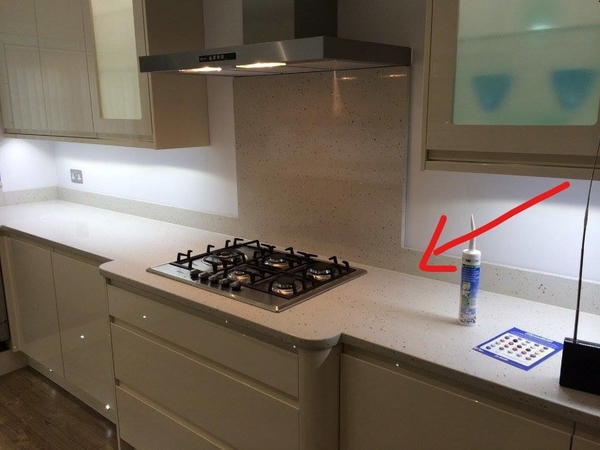
ABOUT THE JOINTS ON QUARTZ AND GRANITE WORKTOPS - JOINTS ON QUARTZ AND GRANITE WORKTOPS Friday 25th May 2018 The typical maximum length for a single piece is 3000mm at which point it will be necessary for a joint. Joints are generally two pieces of worktops butted up against each other and generally less than 30 mm wide. For a perfect look the joins should be inconspicuous as possible. On template you should discuss with fabricator where the joints need to be placed. You will be able to see the joints between pieces but to achieve a perfect join is important that the support or kitchen base do not move between template and fitting. For patterned stones like Carrara quartz, it is important that the vein in the stone is cut in the same way as an adjoining piece but when perfect matching is not possible, this minimises the possibility of odd matching. On installation and to make the joint as inconspicuous as possible a coloured matched epoxy glue is used between the two pieces. This glue is extremely hard, perfectly safe for kitchen use and is not toxic. It is important to colour match the joint the best as possible impossible…
Upstands
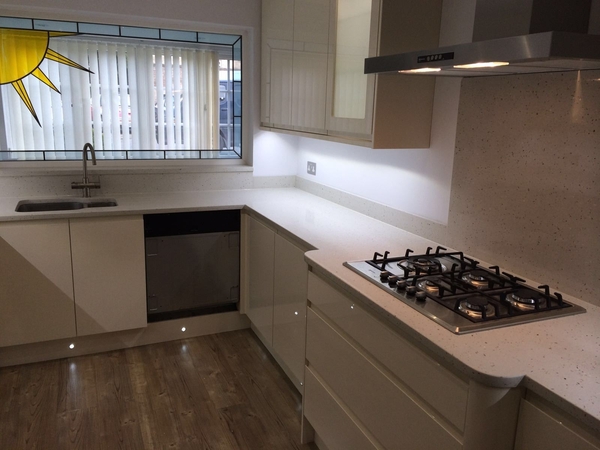
Upstands intended to sit at the rear of your kitchen worktops to hide the gap between them and an adjacent wall. The gap is necessary to allow expansion of the kitchen worktop, though upstands can also help to accommodate an uneven gap if your walls are not totally straight. Upstands thickness are 20mm even if the worktops is in 30 mm thickness, and they be in 70 mm high, 100mm or full high splashbacks. Splashbacks are similar to upstands, but are much deeper, and are usually used behind ovens or sinks…